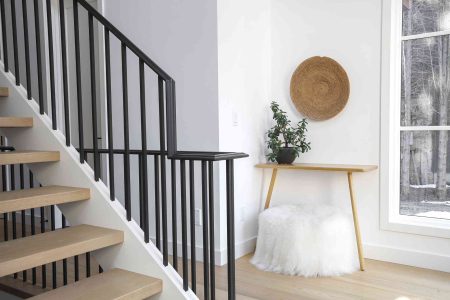


In many remodeling and new-build projects, the flooring order receives the most attention while the staircase is handled later. That approach can create avoidable issues with finish matching, job timing, and installation details. For contractors, dealers, builders, and designers, planning wood stair treads early helps create a cleaner project flow from the first material order to the final walkthrough.
A staircase is not just a transition between floors. It is often one of the most visible architectural features in a home. When the treads do not match the surrounding floors, or when the profile does not fit the design plan, the entire space can feel unfinished. This is especially true in open-concept homes, entryways, and living areas where the stairs are seen from multiple angles.
For flooring dealers, stair parts also affect how customers view the finished job. A homeowner may love the new hardwood floor, but if the stairs look like a separate decision, the project may not feel complete. Dealers who discuss stair treads early can help customers see the full scope of the project before materials are ordered. This reduces last-minute changes and makes the buying process easier for everyone involved.
Contractors and stair installers face a different set of concerns. They need parts that fit the job conditions, arrive on schedule, and support a clean installation. Stair work often requires careful coordination with flooring, trim, railings, paint, and finish schedules. When treads are ordered late, installers may have to pause work, return to the site, or adjust the timeline around missing parts.
Prefinished stair treads can help reduce some of these issues. Because the finish is applied before delivery, there is less on-site sanding, staining, and drying time. This can be helpful in occupied homes where dust, odor, and access restrictions are major concerns. It also gives contractors a more predictable finish result compared with staining in changing job-site conditions.
Material selection should also be discussed early. Different hardwood species offer different grain patterns, tones, and wear characteristics. Oak, maple, hickory, walnut, and other species can each support a different design goal. A builder working on a traditional home may choose one look, while a designer working on a clean modern interior may want a calmer grain and a different color range.
Finish selection is just as important. Stairs receive frequent foot traffic, so the surface needs to support regular use while fitting the design of the home. A finish that looks good in a sample may appear different across a full stair run, especially when natural light hits the treads from above or from side windows. Reviewing finish options alongside the flooring plan helps reduce surprises later.
Measurements are another key reason to plan early. Staircases can vary widely from one project to another. The installer may need standard treads, retro treads, returns, landings, risers, or other related parts. The direction of the open side, the depth of the existing tread, and the condition of the stair structure all matter. When these details are confirmed before ordering, the chance of delays is much lower.
For homebuilders, stair planning can also support better scheduling. Stairs often sit at the center of several trades. Flooring crews, painters, trim carpenters, railing installers, and finish carpenters may all need access at different stages. Having stair components selected and ready at the correct time helps reduce gaps between phases of work.
Architects and interior designers benefit from early stair tread planning as well. A staircase can reinforce the style of the home, connect different floor levels visually, and support the overall material palette. When stair parts are selected late, design choices may become limited by availability or timing. When they are selected early, the staircase can support the look planned for the entire space.
For dealers and retailers, this creates a strong service opportunity. Asking about stairs during the flooring conversation helps customers understand that treads, risers, landings, and related parts are part of the same design decision. It also gives the dealer a chance to increase order accuracy and reduce customer confusion. A simple checklist covering species, finish, layout, returns, and measurements can make the buying process much smoother.
The most successful stair projects usually come from clear planning. The product choice, site measurements, finish selection, and installation schedule all need to work together. When any of these items is left until the end, the project becomes harder to manage. When they are handled at the start, the finished staircase looks more intentional and the job is easier to complete.
For trade professionals who want reliable stair components for remodeling, new construction, or design-led flooring projects, visit Wood Stair Co to review available options and choose the right parts for your next staircase project.